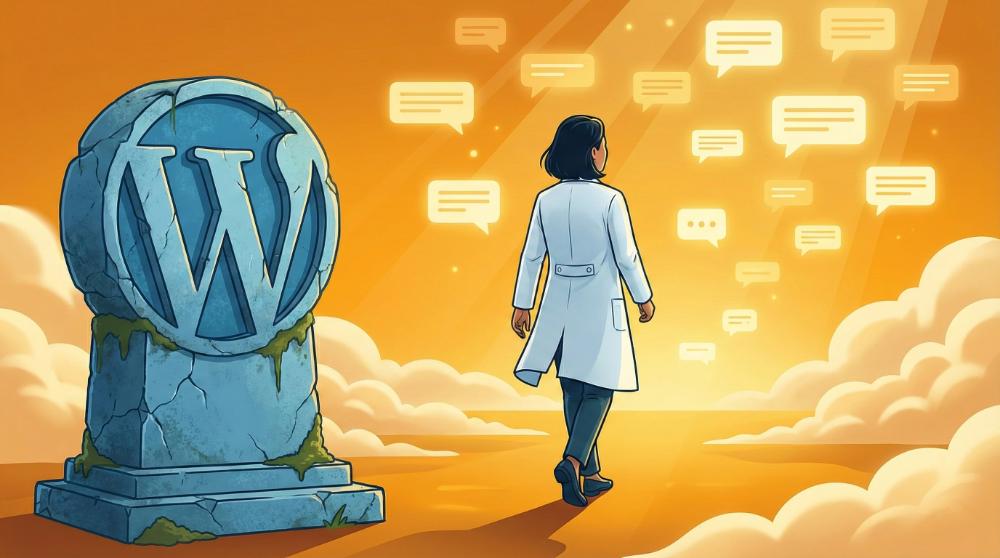
In 2022, WordPress powered 43% of the entire internet. For non-coders like me, it was the answer. You want a professional-looking blog without learning to code? WordPress. You want plugins for email signups, SEO, analytics? WordPress. It launched ALiEMTen years of my blogging life. Respect., grew it for over a decade, and gave my ideas a home.
So this isn't a hit piece. It's a eulogy.
The Promise vs. The Reality
WordPress sold a dream: "You don't need to code, just click." And for a while, that was mostly true. I could make content look professional — albeit a little boring, a little limited in design. But good enough.
Then you want something slightly custom.
I once wanted a simple rollover featureThree hours of my life. Multiple plugins. All of them broke something else. — hover over a term, see an annotation. Educational best practice stuff. I tried plugin after plugin. Incompatible. Slow. Buggy. I gave up.
I hate when strong learning principles get overshadowed by fighting the tech.
The New Way
One week ago, I stopped being afraid of Claude Code. Now I build by conversation.
Those sidebar annotations I gave up on years ago? A few prompts. Done.
When I want to write a blog post, I type /blog in Claude Code. That triggers a custom command — it knows my site structure, my voice, my formatting preferences. We talk. I ramble. Claude refines. When I'm happy, it creates the file, adds the metadata, and I'm doneThis post you're reading? That's exactly how it started..
It feels like magic and how I imagined blogging should be: start with the ideas, AI to help refine, AI to publish.
The Math Has Changed
Here's what matters:
When I was running ALiEM on WordPress, I spent as much time on operations — uploading, formatting, styling, copyediting — as I did on the actual ideas. Call it 50-50.
Now? It's closer to 10-90. Ten percent operations, ninety percent ideas.
That's not a marginal improvement. That's a different way of working.
RIP WordPress?
WordPress isn't dead yet. It still powers a massive chunk of the internet, and for certain use cases — big teams, complex e-commerce, legacy systems — it'll stick around.
But for solo creators? Educators? Bloggers who just want to get ideas out of their heads and into the world?
The middleman content management system (CMS) is becoming optional.
The new bridge for non-coders isn't a CMS. It's conversation. You describe what you want. The AI builds it. You refine together.
How we work is actively changing.
Where to Start
If this resonates, read how I made the switch. The short version: start a project BEFORE you're ready. The obstacles will teach you what you need to learn.
The ceiling is gone. The only question is what you'll build.