For years, I built simple, no-code digital tools that worked but at a cost.
I'd create email filters in n8n to catch any PubMed publication mentioning PECARNI help with this pediatric emergency medicine research group's dissemination efforts. I'd jerry-rig Google Sheets with complex formulas to track research data. I'd write instruction manuals for myself—complete with screenshots—so I'd remember the exact sequence of clicks needed to export analytics from my learning management system.
The tools sort of worked until I'd revisit them 3 months later and realize I'd forgotten half the workarounds. "Don't forget to uncheck this box or everything breaks." "Remember to filter Column F before copying to Sheet 2." The instruction manuals piled up, but I still dreaded using the tools.
The worst example was my course analytics for ALiEMU, a medical education platform I run. Every few months, someone would ask for completion data. I'd spend hours downloading the entire database as a CSV file (over 100,000 rows), creating formulas to calculate completion rates by series, parsing data by month with running totals. As courses multiplied, my manual hacks started breaking. I'd add more workaround steps. The Google Doc with my process grew to pages of screenshots and substeps.
I dreaded running those numbers.
The Missing Thread
I kept building isolated tools—a patchwork of one-off solutions, each stitched together hastily, each unraveling the moment I looked away. They'd work for a few weeks, maybe months, then I'd abandon them.
The breakthrough came when I discovered Daniel Miessler's KAI framework—a personal AI assistant architecture built around persistent memory. Not just data storage, but context: your learnings, your decisions, your patterns, who you are.
That's when I realized that in my search for the perfect optimization platform or app, the missing piece wasn't another tool. It was the thread that could run through all of them.
I call my system PAIA (Personal AI Assistant). Building it forced me to learn Claude Code. And that changed everything.
Stitching It Together
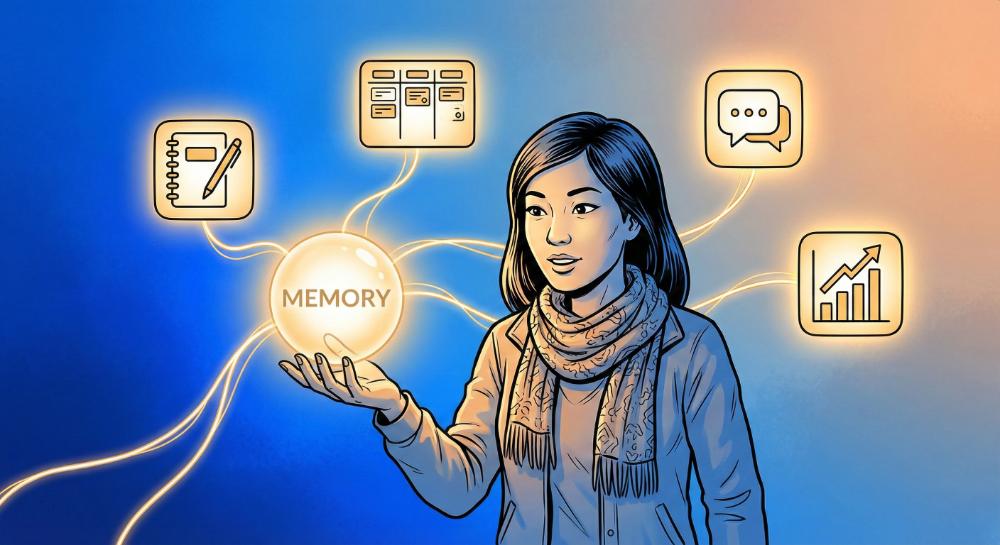
Here's what my PAIA actually does: It maintains memory files that multiple tools and skills that I built can read and write to. When I journal, insights get extracted and stored. When I create a project card in my private kanban board (I call it Kindling), it can pull from those insights. When I watch a YouTube tutorial video, it links to relevant projects. When I create a Kindling project card, my customer relationship management (CRM) tool can suggest collaborators I've worked with on similar things.
The tools stop being isolated scraps. Memory is the thread that runs through them all, weaving them into a unified system that knows me.
Let's look back at the ALiEMU analytics nightmare. Fast forward to last week, Claude Code helped me build a live dashboard that pulls real-time data via the Learndash REST API. It remembers how each course categorizes into series. It knows how I want the time-series graphs to look. If I want to add new courses or series, I can revise the analysis by just talking with Claude Code—which has access to both my overarching PAIA memory and my ALiEMU project memory.
No more CSV exports. No more manual formulas. No more screenshots documenting workarounds. The system just works.
The Journal Tool: Where PAIA Gathers Memories
Building PAIA's journaling feature took about 10 hours over 2 days. Honestly, half of that time was learning how to set up and use Claude Code. The resulting Telegram botThis is basically direct message channel with PAIA lets me create journal entries about what I'm learning or thinking about. This isn't a traditional journal—it opens a dialogue with Claude Haiku 4.5, which asks follow-up questions, provides observations, and challenges my assumptions. After I say "done," it saves the transcript and extracts insights into memory files.
Each full conversation costs 3-8 cents.
At first I considered turning off the AI reflection to save money. How good could an LLM really be at reading between the lines?
Turns out: about 50% of the time, it makes me pause. And almost all the time, I felt compelled to answer the follow-up questions.
I once journaled about my frustrations about paying $400/year for a Typeform subscription when I could probably build my own form builder. I framed it as a money problem.
The AI pushed back: "The frustration isn't about the $400. It's about the feeling that you should've known this was buildable—that you outsourced something within reach."
Fact.
PAIA knew from our prior conversations that I lean towards solving problems on my own, am energized when I figure out an efficient, self-sufficient solution to problems, and like to be in control of things. The real issue was autonomy, not budget. I wanted to own my tools, not rent them.
These reflections are worth every cent.
Everything Connects Now
This blog post itself was sparked by PAIA. I asked it to review my recent journal entries and Kindling project ideas to suggest blog topics. It pulled from recurring themes and learnings, connected dots across conversations, and helped me see patterns I hadn't noticed.
That's the magic of a shared memory. It's not just storage—it's active thinking.
The common thread across all these tools? Me. My context. My memories.
Now when I build anything, I'm only thinking about how it plugs into PAIA.
Start Small
Thinking of trying this out? You don't need to build everything at once. Start with the memory—the unifying thread you'll run through everything else.
Build a simple journaling system (Telegram bot + AI reflection + memory storage). That took me 10 hours as a beginner. Then build a to-do list or kanban board for projects. Host it on your desktop or use a free static site hosting.I use Netlify - no financial disclosures.
Once you have 2 tools reading the same memory files, you'll feel it click. Every new tool now becomes another thread in the weave, not another isolated tool to manage. They're parts of one fabric.
Memories - this changes what's possible.